Providing instant value an the onboarding journey
Onboarding redesign for a white-label financial planning platform
I led the redesign of onboarding so users receive a personalised financial snapshot the moment they finish, closing the gap between effort and reward for direct customers and white-label partners alike. It launched to strong early results and is rolling out across the platform.
60%+
My role
Leading Product Designer. I owned the design end to end, partnering with a product manager, engineers and a freelance user researcher. Aligning the coaching, compliance and commercial teams around a single output.
Completion rate from launch
3
Entry routes, one flow
2 wks → 0
Time to first value
The problem
Onboarding collected detailed financial information through a 100+ question flow. The payoff was invisible until the first coaching call, often two weeks later. Users invested significant effort without seeing anything in return.
For B2B SaaS partners offering the experience under their own brand, this compounded. They needed their customers to feel excited early.
The brief had two layers: embed a compelling snapshot in onboarding that demonstrated value upfront, and make it configurable across multiple brand surfaces, without undermining the coaching experience that followed or the regulatory line between guidance and advice.
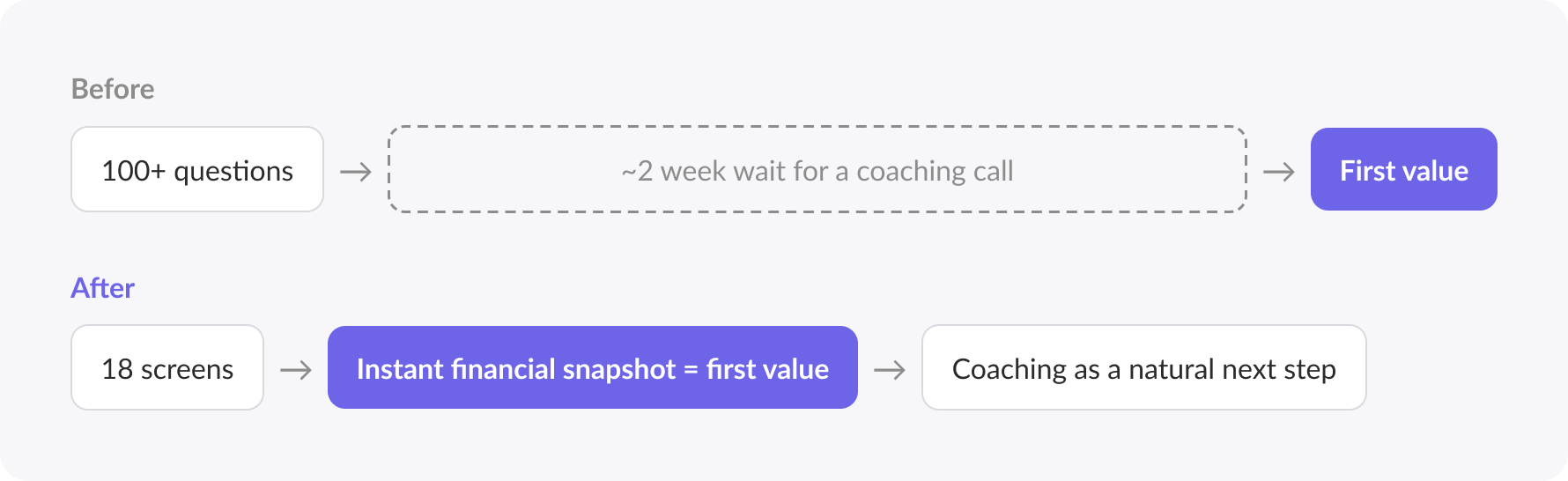 Moving the payoff from the first coaching call to the end of onboarding.
My approach
I started with medium-fidelity prototyping to pressure-test whether we were framing the product correctly. Working with a freelance user researcher, I ran moderated sessions with non-customers exploring expectations of coaching, reactions to financial data in isolation, and the importance of the human element.
The key insight: data visualisation created powerful moments of recognition, but only when users had given enough input for the output to feel credible. That set the core design tension: ask enough to be credible, but few enough to finish.
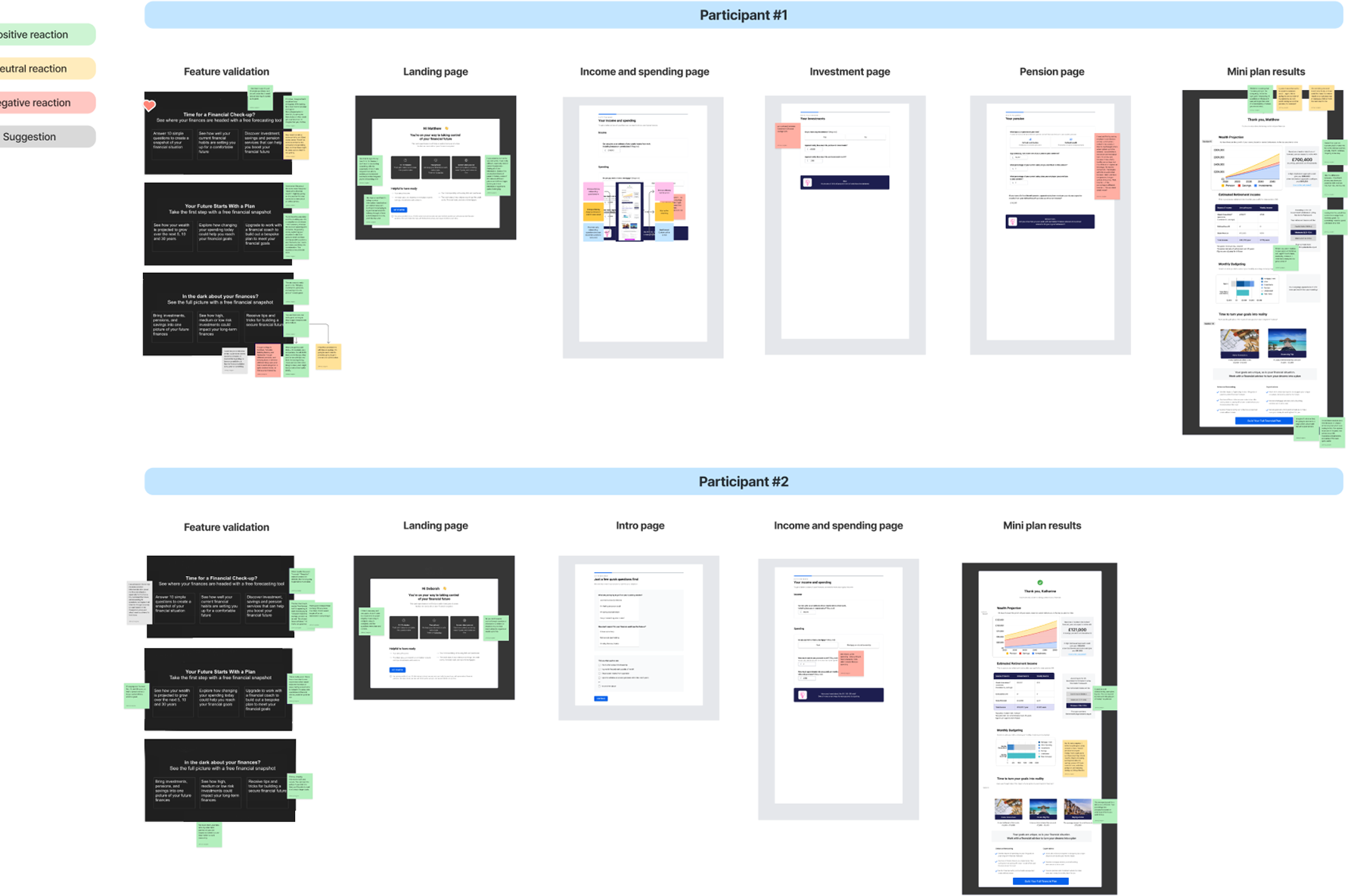 The medium-fidelity prototype was built to drive user interviews. It enabled us to uncover unexpected users needs that shaped the direction of the solution.
I synthesised the findings into two personas. The overwhelmed procrastinator needed reassurance and a clear path forward, so I stripped the questionnaire back and framed outputs encouragingly. The anxious planner needed transparency and context, so I invested in detailed data visualisation and copy explaining what the numbers meant in practical terms.
The medium-fidelity prototype was built to drive user interviews. It enabled us to uncover unexpected users needs that shaped the direction of the solution.
I synthesised the findings into two personas. The overwhelmed procrastinator needed reassurance and a clear path forward, so I stripped the questionnaire back and framed outputs encouragingly. The anxious planner needed transparency and context, so I invested in detailed data visualisation and copy explaining what the numbers meant in practical terms.
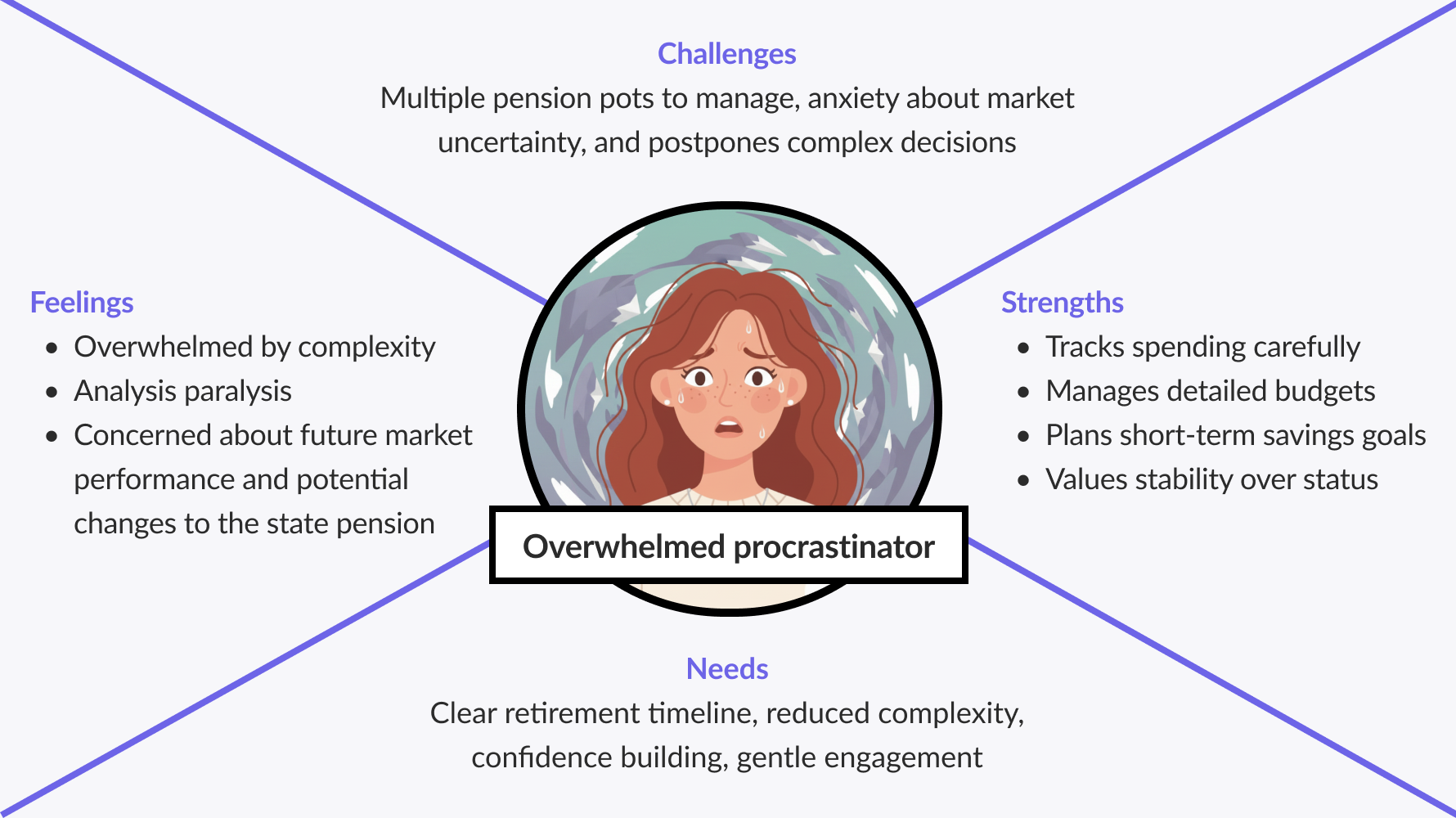 The two personas helped guide design decisions at key moments in the flow.
I tested the prototype with three distinct entry points to learn whether one flow could flex across audiences without fracturing the experience: an employee arriving through their workplace benefit, a prospect referred by a partner channel, and a white-label customer entering through a SaaS partner’s own website.
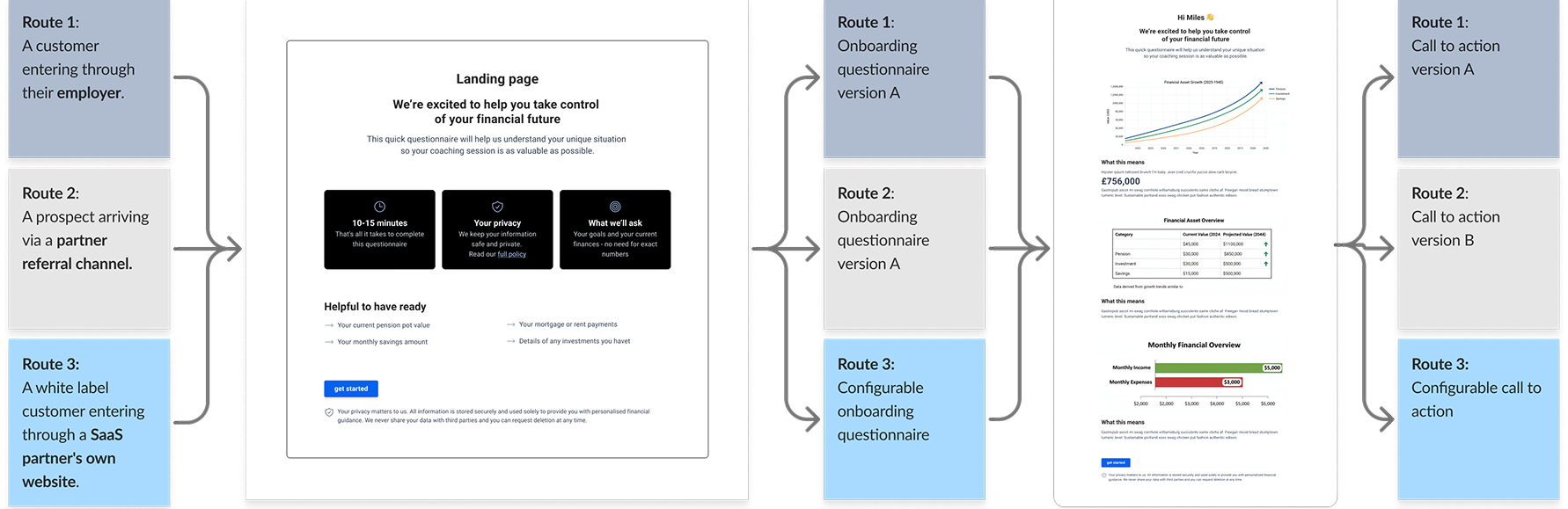 Early testing helped us validate the flow across different entry-points and conclusions.
Next, I facilitated a stakeholder workshop in which each person designed their own version of the output page and presented their reasoning. Teams outside product had very different needs, and the workshop made those visible, giving people a shared space to work through them together. We synthesised a single structure everyone could stand behind.
Early testing helped us validate the flow across different entry-points and conclusions.
Next, I facilitated a stakeholder workshop in which each person designed their own version of the output page and presented their reasoning. Teams outside product had very different needs, and the workshop made those visible, giving people a shared space to work through them together. We synthesised a single structure everyone could stand behind.
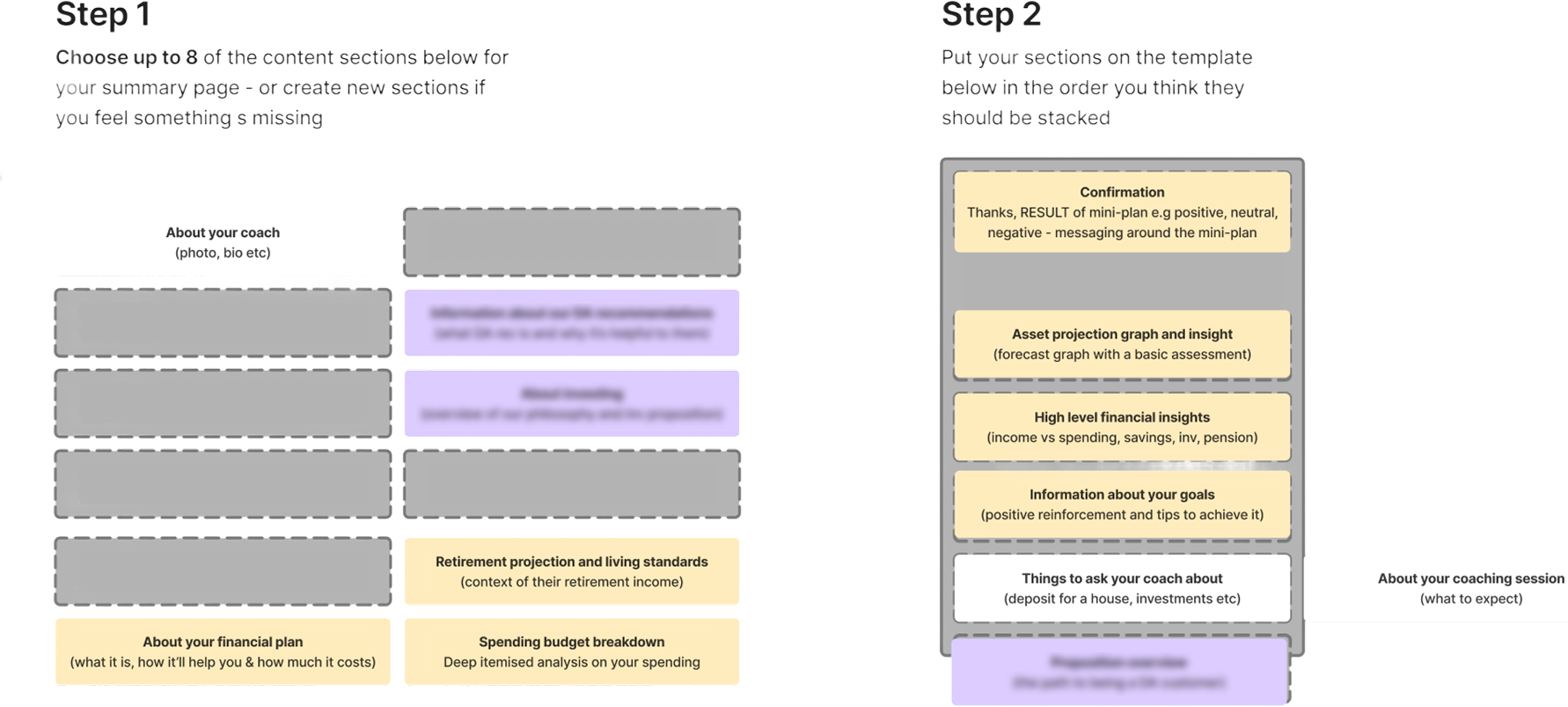 Stakeholders each built their ideal results page, which made competing priorities visible early and easier to resolve.
What we cut, and why
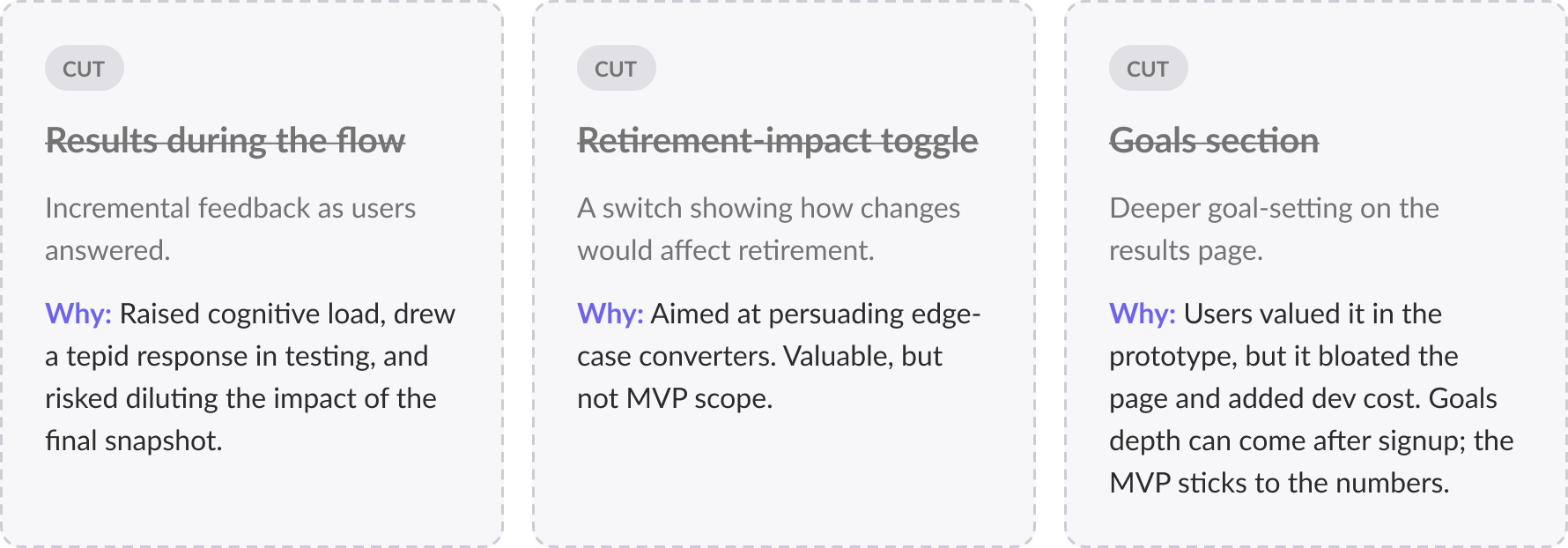
Knowing what not to ship mattered as much as what did. Three ideas tested well enough to be tempting, but didn’t earn a place in the MVP.
The solution
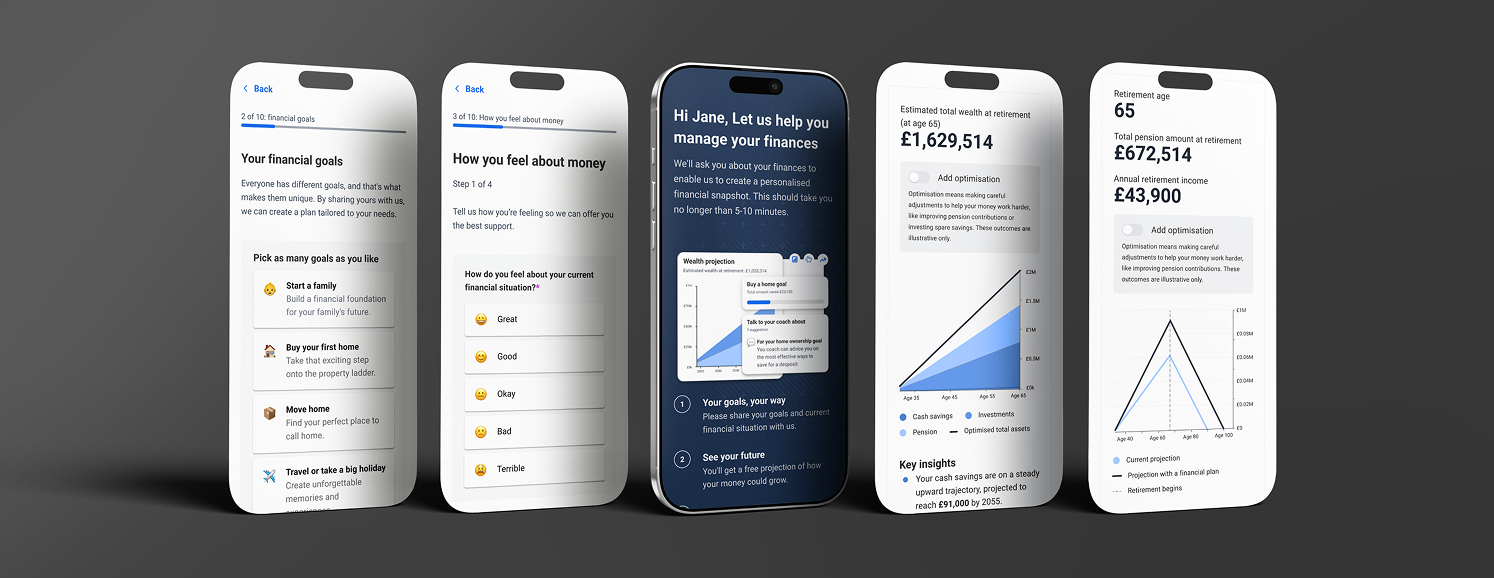
The redesigned flow asked significantly fewer questions while delivering a clear financial snapshot immediately after completion. The retirement forecast contextualised figures against real living standards, showing users how many holidays they might take per year or how often they could afford to eat out.
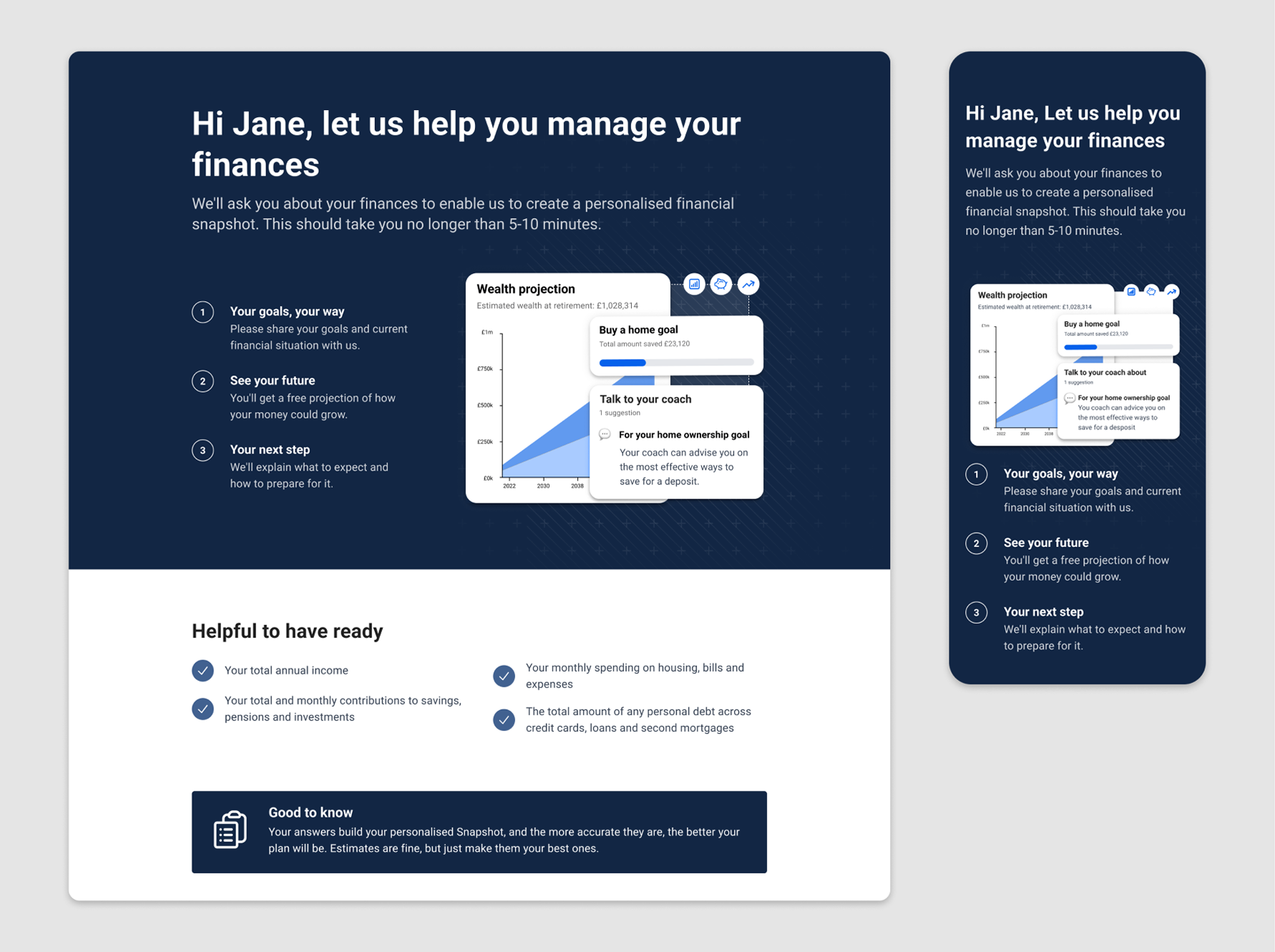
The landing page primed users by framing the experience as personalised and previewing the visual style ahead. Question pages were optimised for mobile using emojis to inject warmth into a minimal aesthetic, generic enough for white label use. The Mini Plan used inclusive copy throughout, framing less positive results as opportunities rather than failings. Calls to action were fully configurable, adapting depending on whether the journey led to coaching or another outcome entirely.
 Living standards close-up. We turned an abstract pension figure into real-life terms like holidays and meals out, using the PLSA Retirement Living Standards. The chart shows the gap between carrying on as you are and following a plan.
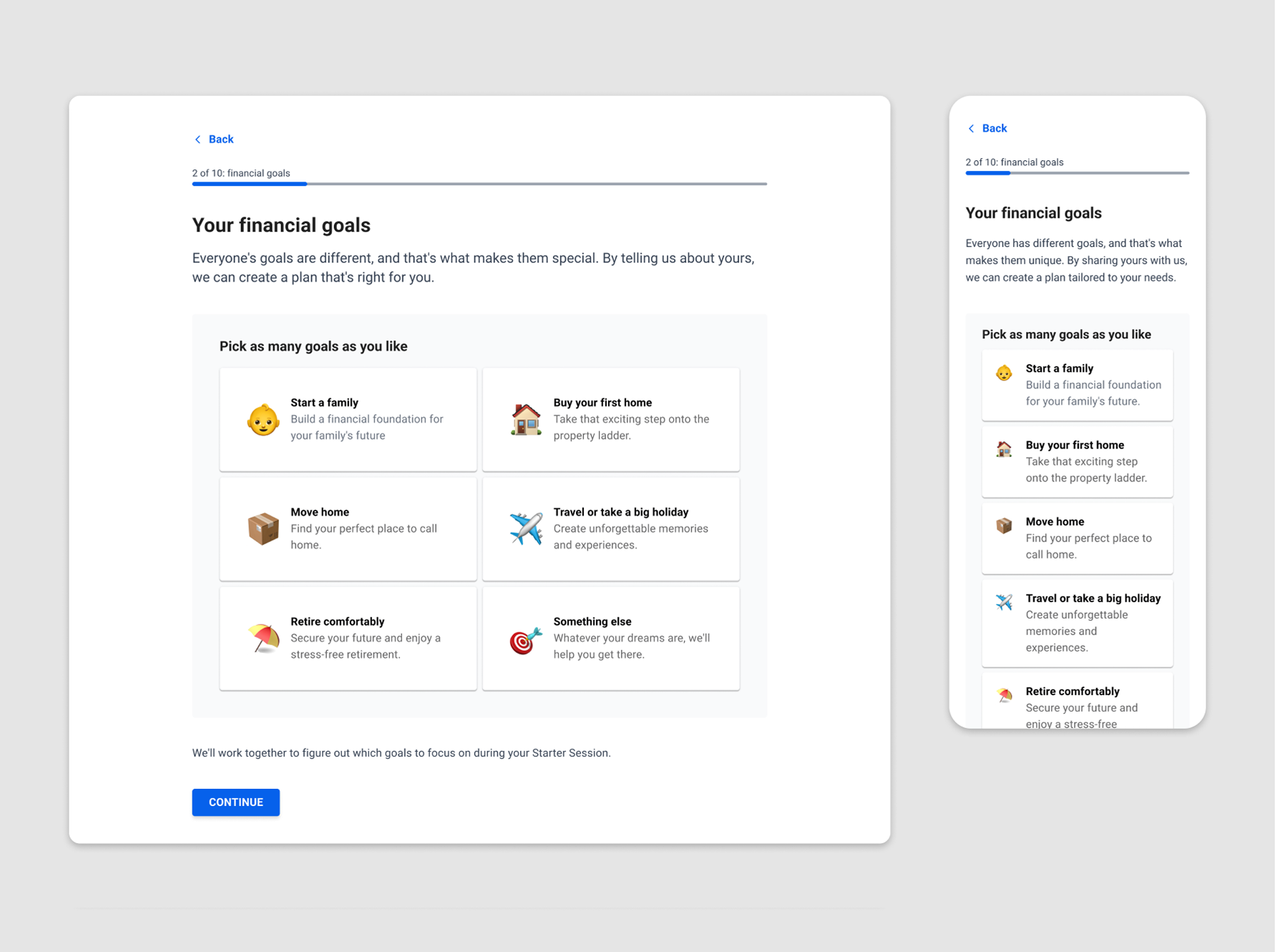 Final mobile designs, through to developer handoff. Emoji and conversational copy made it feel less like filling in a form, and an early question about how people feel about money gave coaches context before the first session.
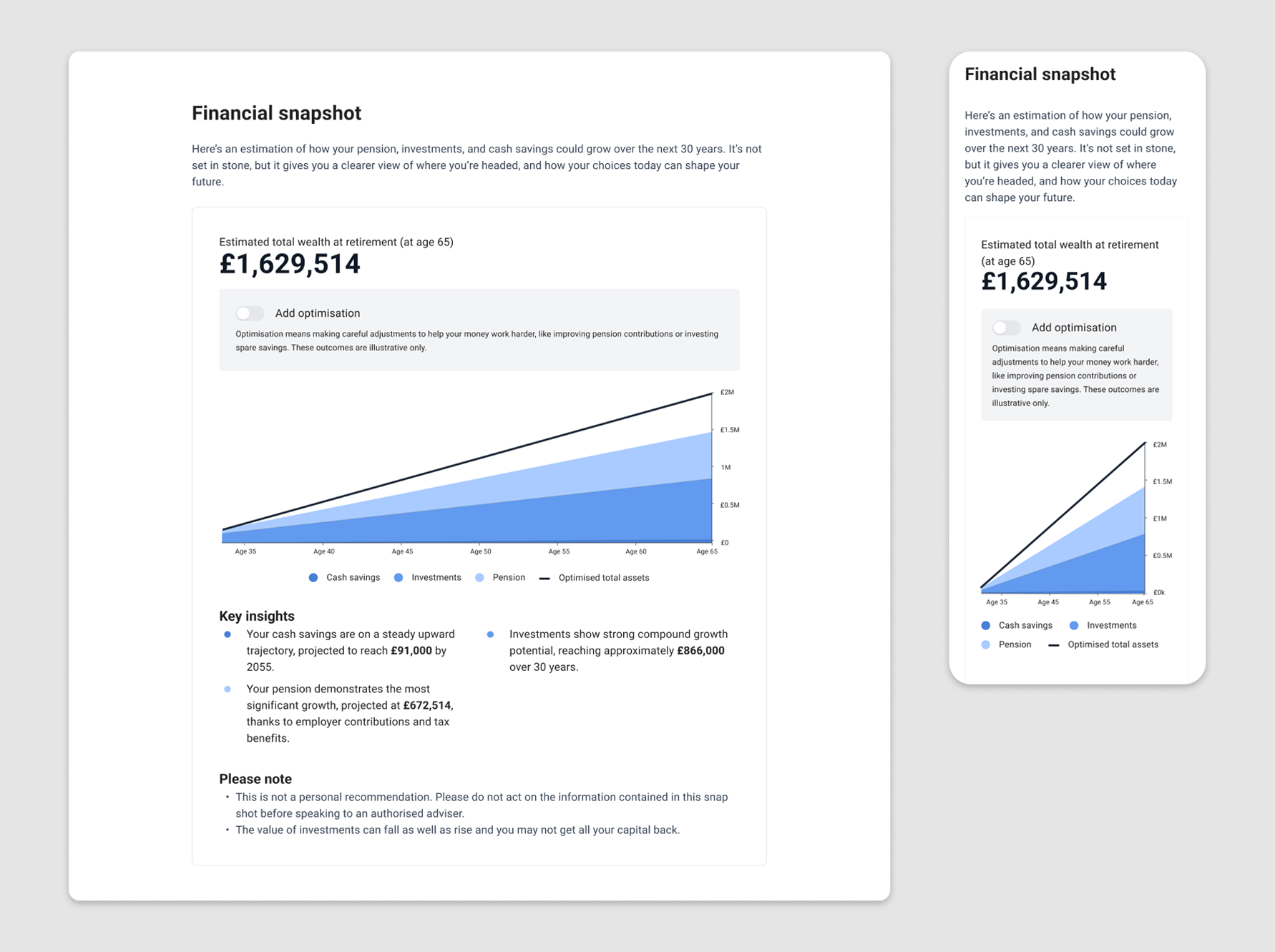 The financial snapshot brings pension, investments and savings into one view of future wealth. Plain-English insights explain what's driving the total, so users don't have to read the chart.
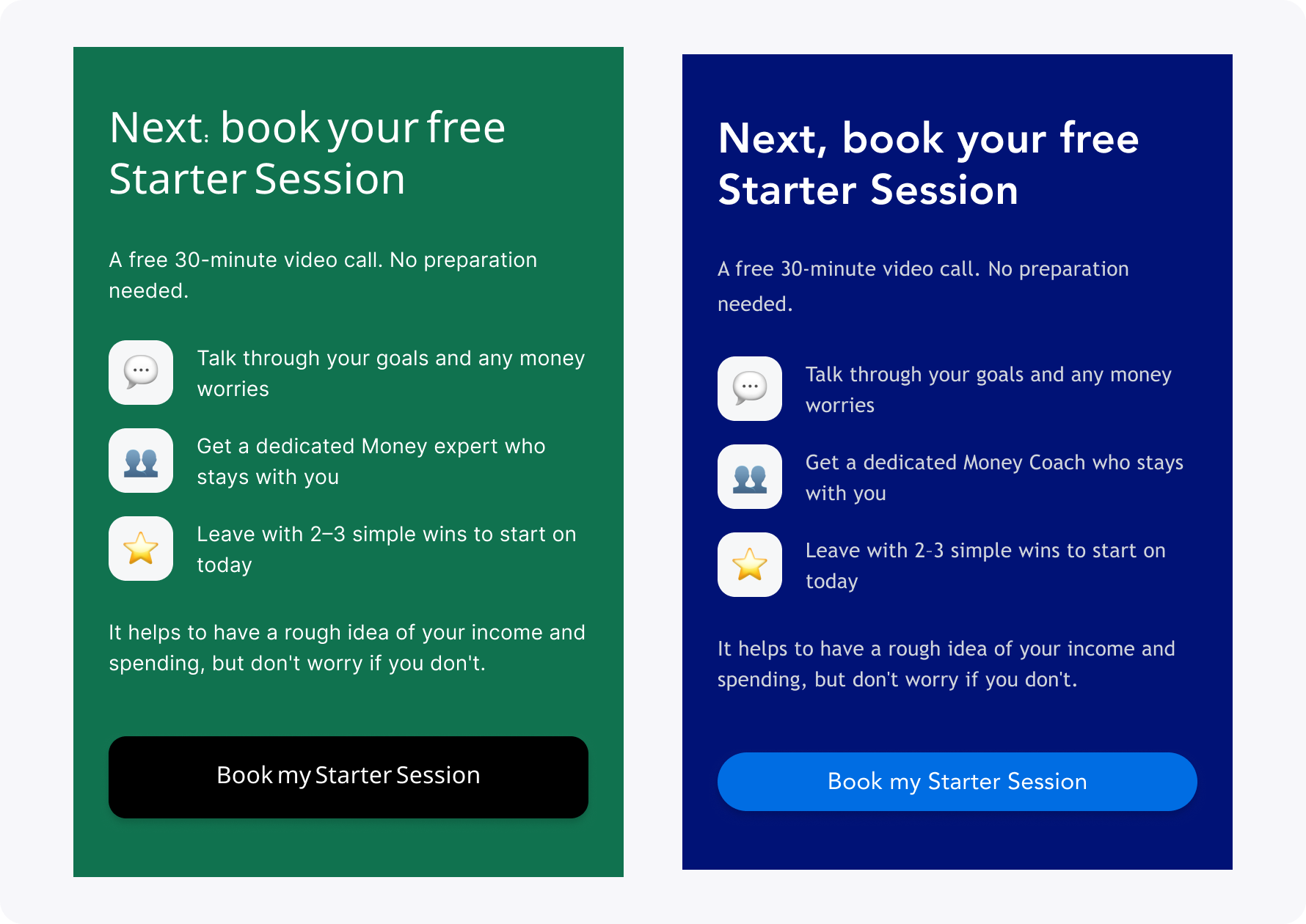 The same snapshot adapts to each partner's colours, fonts and call to action, so new partners can launch without bespoke design work.
Designing within FCA rules
Showing projected wealth without crossing into regulated advice meant every number needed context: clear assumptions, "not a personal recommendation" messaging, and risk warnings that informed rather than alarmed. Small touches did most of the work: "in today's money" under each total, rounded figures instead of exact ones, and "could" instead of "will".
My reflection
This project sharpened my thinking on designing for two distinct audiences at once. Working as an equal partner with a researcher, rather than treating research as a hand-off, made findings more actionable and design decisions easier to defend.
The coaching team’s concerns also turned out to be a useful creative constraint. Sometimes the most valuable input comes from the people most worried about what you’re building.
Next, I’d measure conversion from snapshot to coaching, and reintroduce goals depth after signup.